Custom models
Tuned on the project it will run on
We finetune one of our pre-trained models on tiles from your project, or train a completely new model for a specific project or data type. Before it runs, it has seen your sensor, your density and your classes.
What we do to it
Your classes, tuned on your own data
Machine learning finds the classes and rule based steps settle what geometric context decides better. We reach over 98 % classification accuracy on many classes and projects, measured tile by tile on our benchmark dataset.
Samples from representative areas and edge cases, with the classes you need. We check them against your data's density and test what our existing models already cover.
Pre-classified data speeds things up. The platform produces new training data quickly, by your team or by ours.
Iterative training on your data: a single day to adapt a classifier we already carry, a few weeks for a new one.
Where it runs is your choice: the Pointly platform, the API or your own hardware with Pointly Box.
On real data
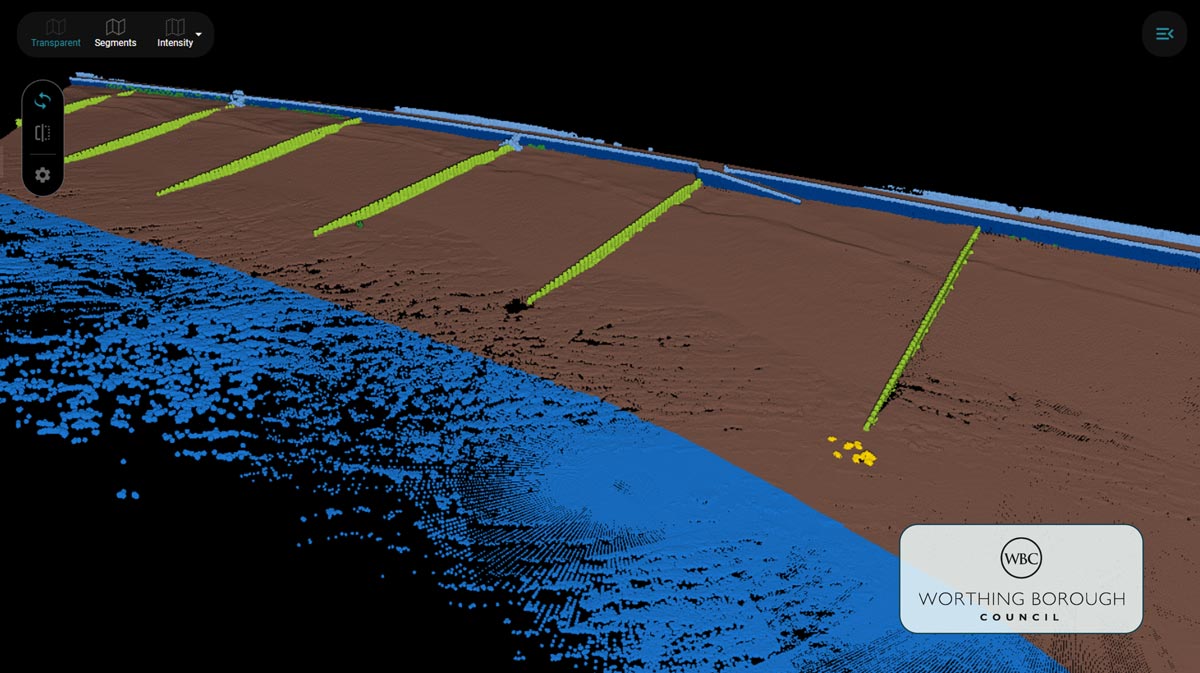
A classifier built for the coast
Seawalls, groynes and the structures along a beach, each in a class of its own. Ten classes were defined and specifically trained for the client, on their own scans. Read the Worthing beach project.
Photogrammetric point clouds for Ordnance Survey
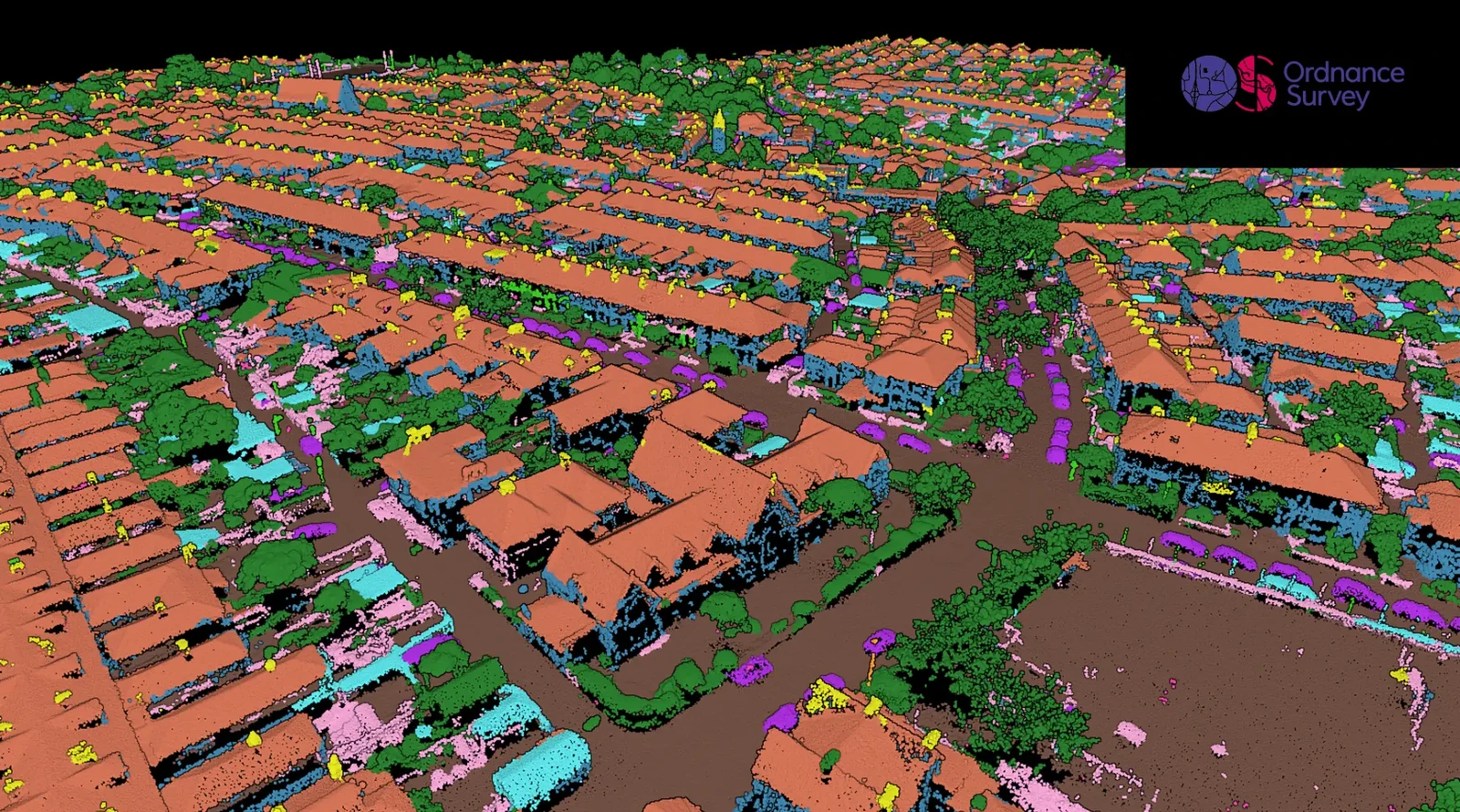
For Ordnance Survey a custom classifier was trained for urban analysis on point clouds derived from aerial survey imagery. It separates building facades from roofs and roof clutter and detects vegetation, ground and vehicles.
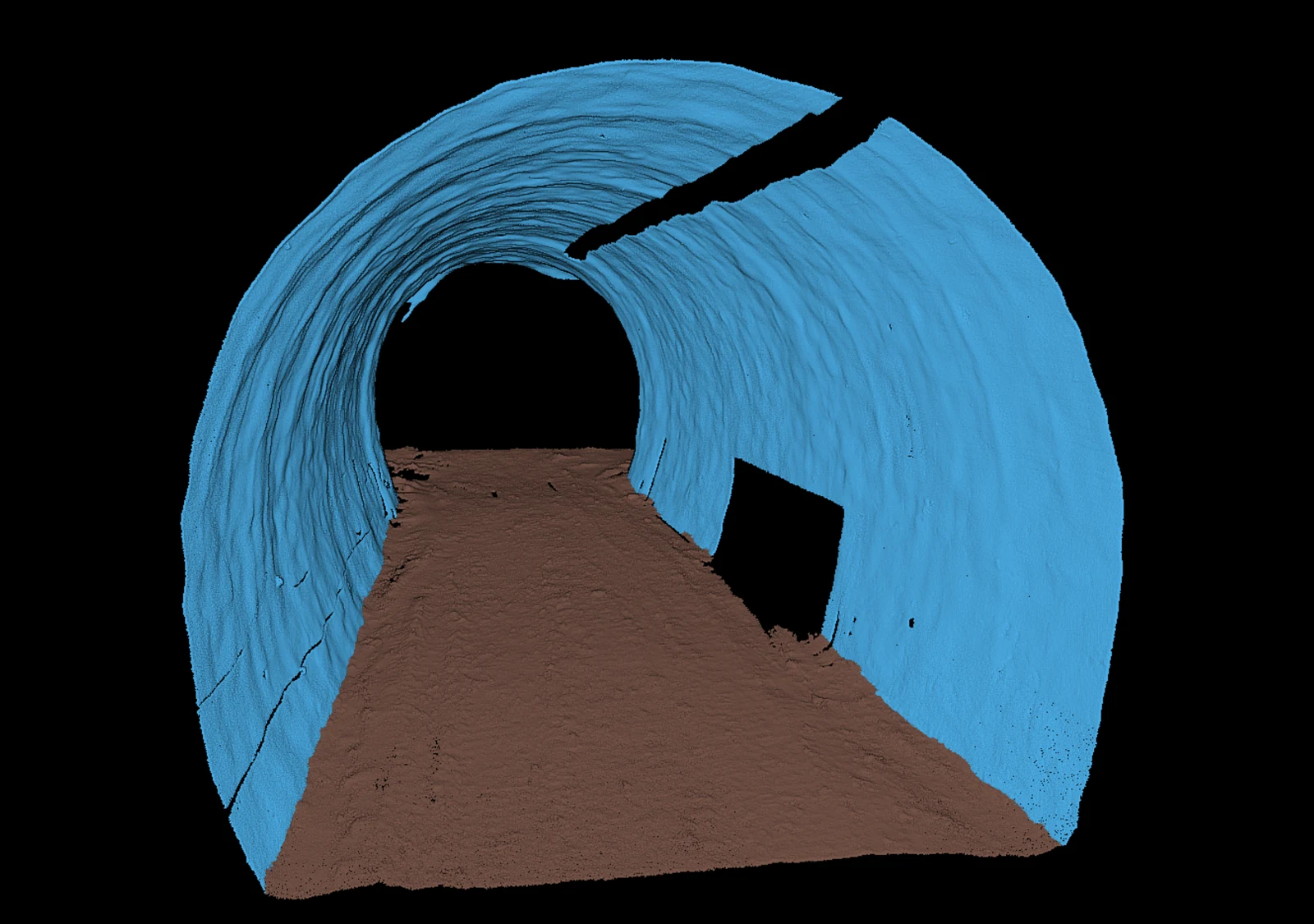
Automatic cleaning of tunnel scans
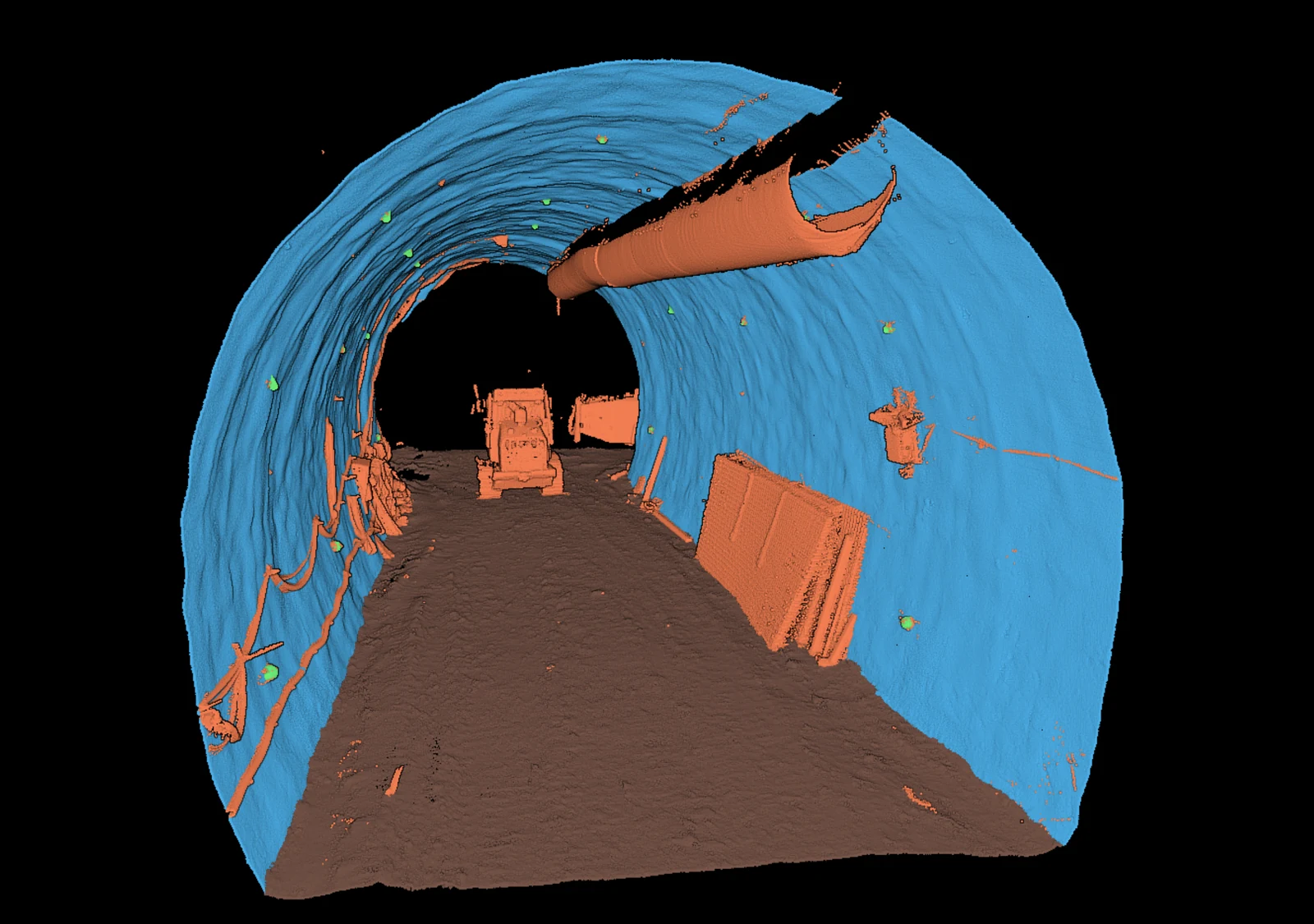
A scan of a mining tunnel picks up everything in it: vehicles, ventilation ducts and cables. A custom classifier separates the wall and the ground from two kinds of artefact, the anchor points in the wall and everything else in the tunnel. Taking them out leaves the tunnel surface on its own.
Deliverables
Where a trained model goes further
Every point in your cloud carries a class. Every filter, cleaning step and derived product is built on it.
Your classes, to your specification. Before any training starts, we check with you which of them your data can support.
Height thresholds, road rasters and cadastral or other base data separate classes a model alone would mix up. For some classes a rule on that data is more reliable than another trained class.
Single 3D points placed at defined positions on an object, such as pole tips, insulator suspension points and pole bases.
A custom model can write further attributes for each point beside its class. They come back inside your original LAS or LAZ file.
Photogrammetry, bathymetry, sonar and Geiger mode lidar each record a scene differently. A custom model is trained on data from the sensor you survey with.
What lands in your hands
The output
- ALS
- Mobile Mapping
- TLS
- Photogrammetry
- Bathymetry
- Sonar
- Geiger mode lidar
at large scale
- LAS
- LAZ
- DXF
- Shapefile
- CSV
- GeoJSON
classified cloud and objects
Where it runs
On Microsoft Azure inside the EU by default.
A separate tenant in the Azure location your rules require.
The whole stack on your own hardware, air gapped where that is the requirement.
A project like yours
What the client said

“What used to be a cumbersome process, taking days of manual finetuning for the classifications can now be done in a fraction of the time - with higher consistency and greater accuracy.”
We look at your data first
Send us a sample with your project requirements for us to evaluate.
Questions
Before the classifier is trained
- How long does a custom model take?
We adapt an existing classifier to a new catalog in a single day, because the training base is modular. A new model takes a few weeks. Most of that time goes into generating the training data.
- What does it cost to run once it exists?
A model trained on your catalog runs at 0.20 € per million points, billed monthly on the points actually processed, and the training is quoted per project. Where a standard classifier already covers your classes, no training is needed and it runs at 0.15 € per million points.
- How much training data do you need from us?
It depends on how far your classes sit from the existing training base. We look at a sample of your data and name the amount before anything is agreed.