Point cloud vectorization: create CAD models with ease
3 min readProduct
With our latest feature release, Pointly has made significant progress by integrating vectorization features for point clouds into the platform. This addition merges CAD's structured design capabilities with the complexity of point clouds. As a result, users now have access to a comprehensive toolset that enables efficient and precise interaction with point clouds using a dedicated design framework. This integration aims to improve operational efficiency for industry professionals.
What is CAD?
A Computer-Aided Design (CAD) software is a system designed to assist in the creation, modification, and optimization of designs. Predominantly used in sectors ranging from civil engineering to product design and aerospace, CAD tools are instrumental in allowing professionals to draft and visualize complex structures and designs. Users can easily modify data by combining point cloud classification and vectorization with CAD models. This ability ensures accurate alignment and interpretation, increasing the overall efficiency of the digitalization process.
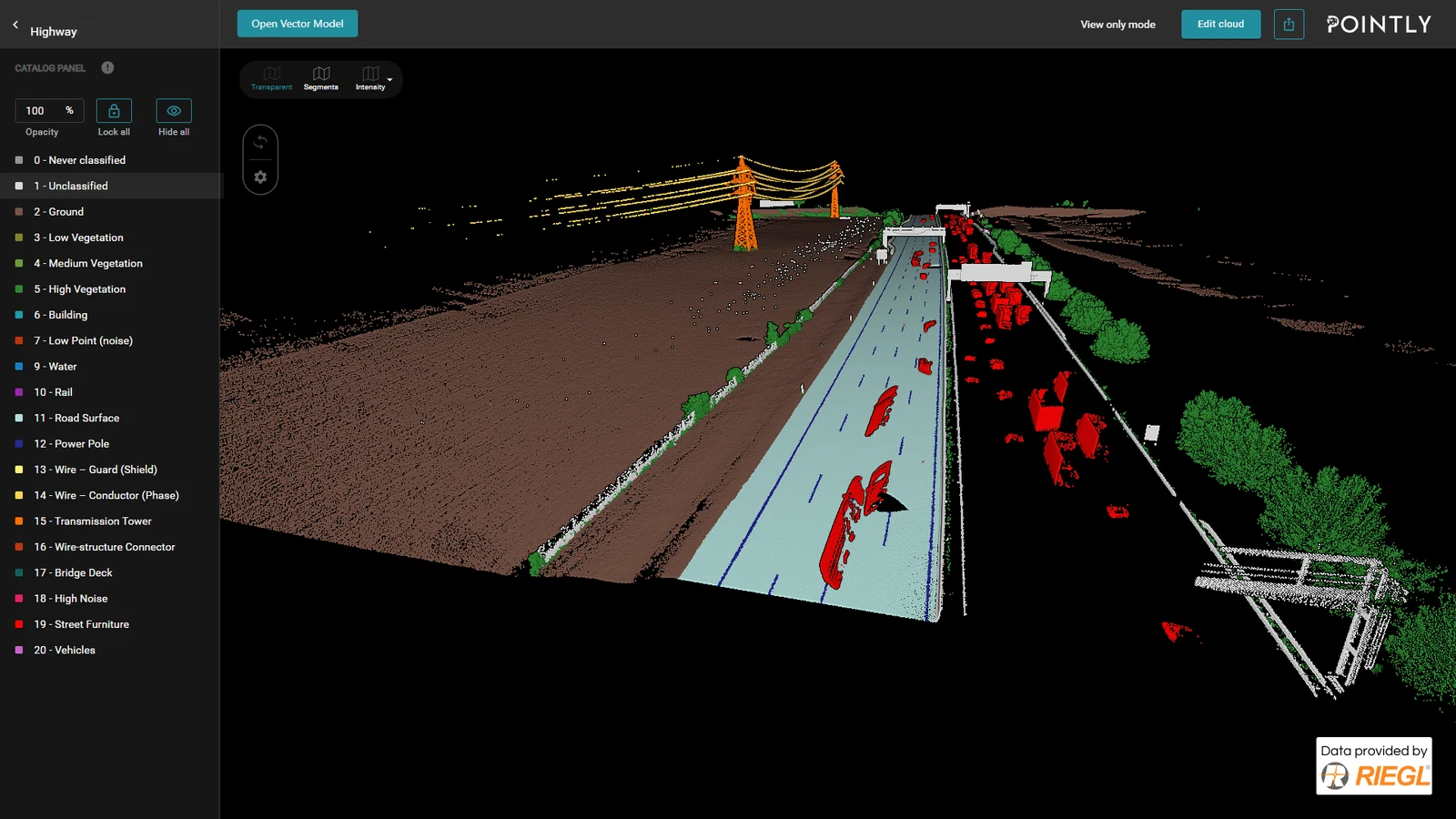
Benefit from fully integrated vectorization features
Upon accessing Pointly's classifiers, users have the option to transition from the classification mode to the newly implemented vector model editing mode. This new mode introduces:
- Vector models. Several models can be created and managed per project.
- Vectorization tools. Creation of vector lines, 3D polygons, and the positioning of point features.
- Editing modes. Options such as snap to points for precise placements and free placement for a more flexible approach.
- Customizable object catalog. Adjust labels, types, colors, and icons for each layer as per your project requirements.
- Efficient export mechanism. Post-design, the created objects can be exported in the geojson format to be imported into any other software suite.
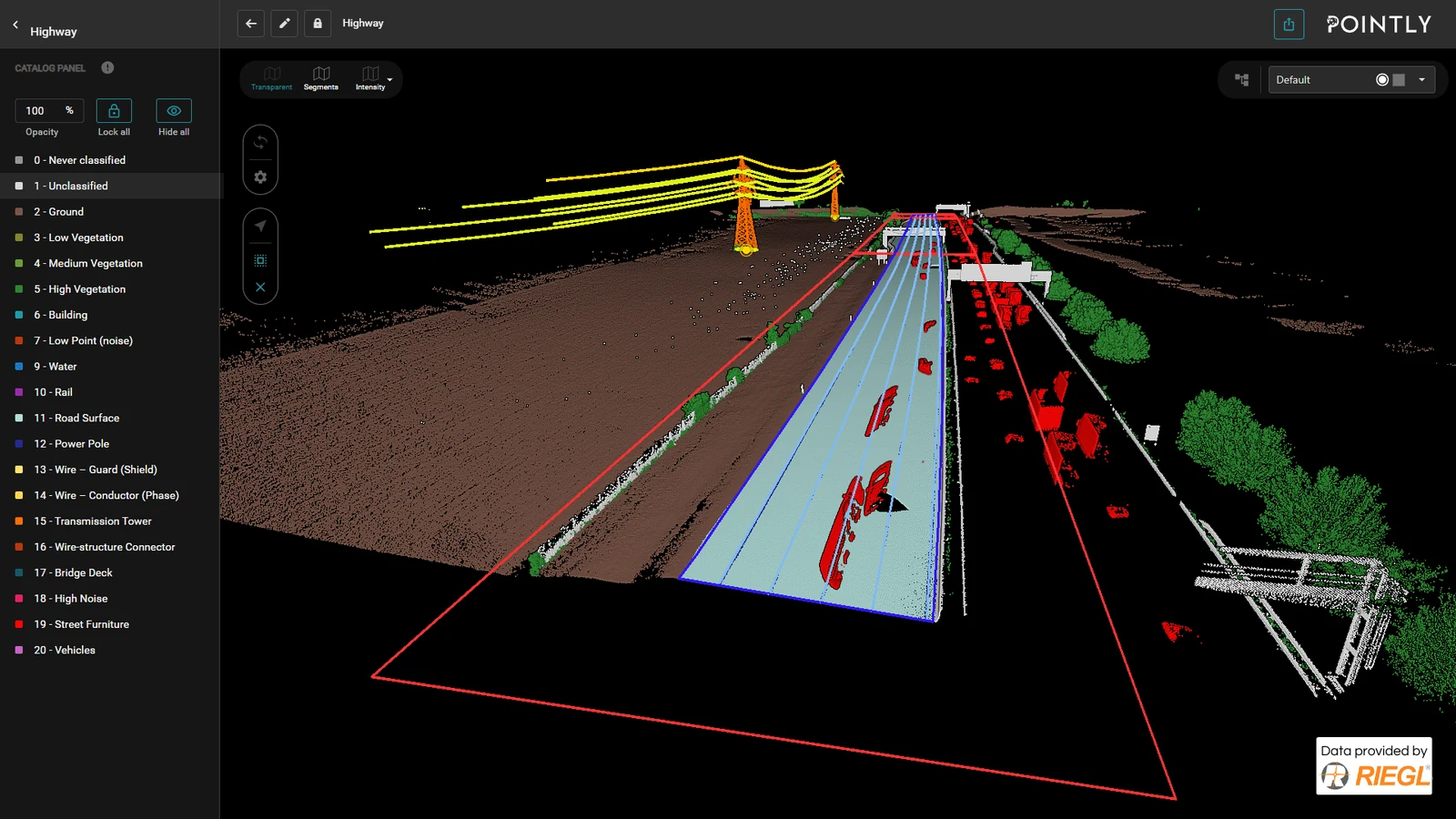
Outlook: expanding our capabilities
The drawing and editing functionality for CAD models is not just an end in itself. It is designed to pave the way for future automation of vectorization processes through advanced deep learning architectures. The potential uses include creating digital twins, enhancing Building Information Modeling (BIM) processes, as well as improving surveying and monitoring capabilities in a variety of sectors, such as urban planning, forestry, utilities, infrastructure and many other.
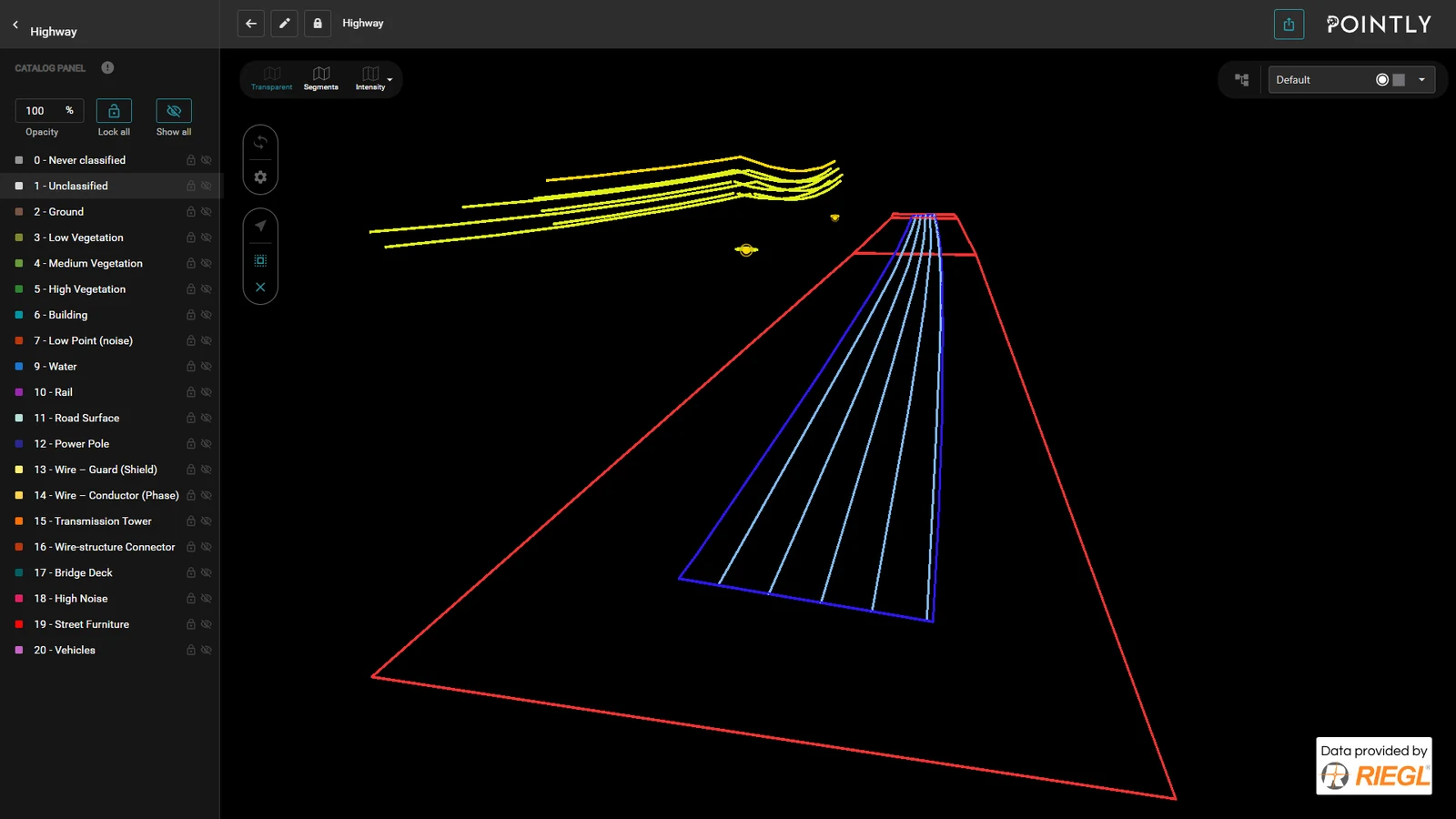
At Pointly, the goal is to offer a full-service AI platform: from initial training data generation, via custom deep learning model training, model deployment up to fully scalable automation solutions, ensuring a seamless fit within established workflows.
Find the right solution for your business
You are searching for professional support and effective solutions? We offer a wide range of services, tailored for your needs. We also value your feedback and encourage you to share your use cases or queries. So feel free to contact us.
Update. Vectorization has since moved into the platform itself, with lines, polygons and point features drawn against the classified cloud. What that looks like is in the platform write-up, and what comes out as geometry today is on the roads and highways page.
Read more about the four ways to run Pointly.
Read next