Pointly as a point cloud management platform
3 min readProduct
A classifier answers one question about one file. The work around it is a different question: where the file came from, who has looked at it, what was agreed about the odd object in the corner, and which of the four hundred tiles is still waiting.
That is point cloud management, and it is what a survey department actually spends its week on. Pointly is built to carry it.
Everything in one project, and a map to find it on
A project holds the clouds, their catalogs and their state. The list says how many points each one has and whether it is ready, and the map view puts them where they were captured, on a basemap, so you find a tile by where it lies.
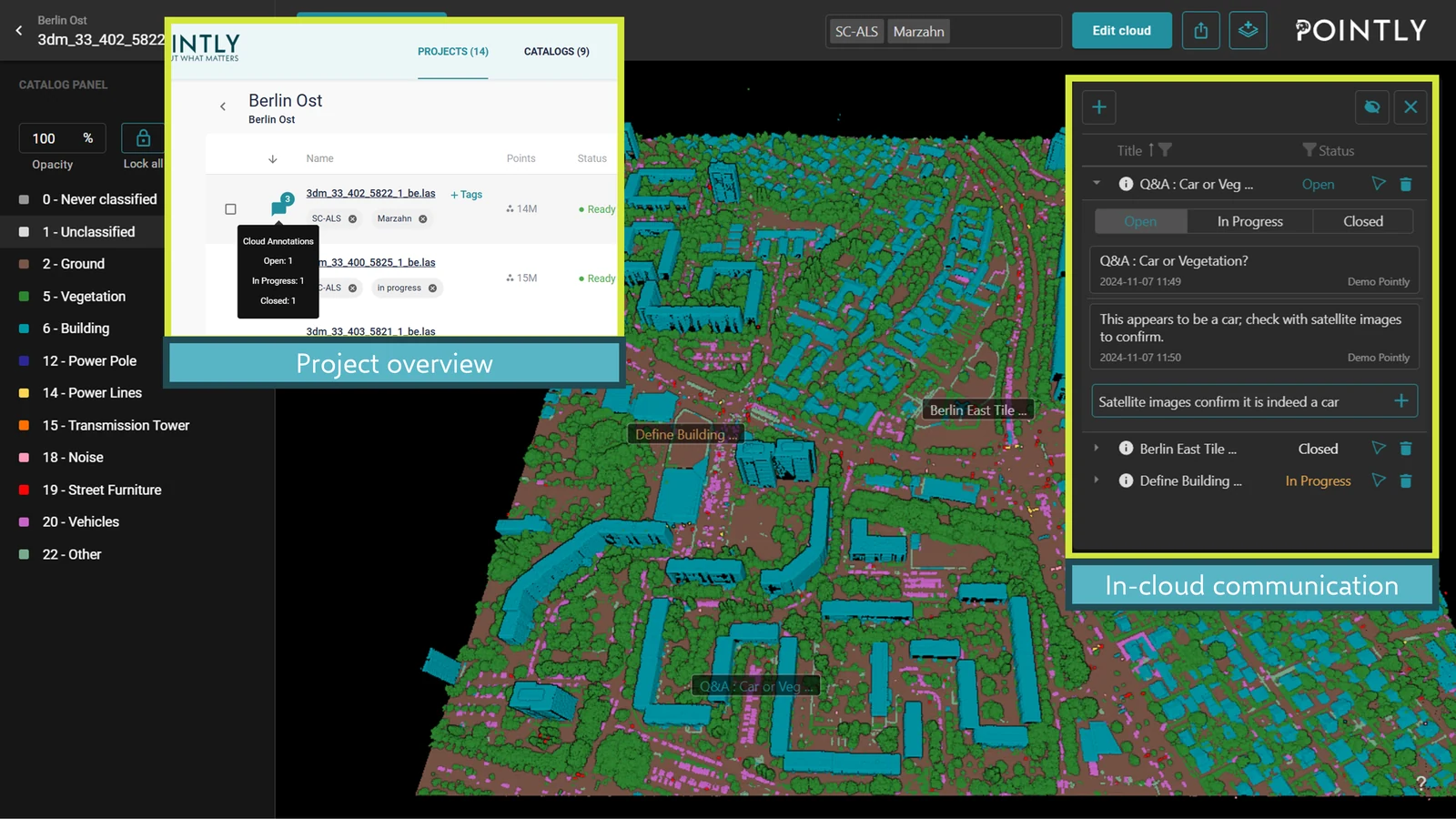
The conversation stays with the data
An annotation is a pin in the cloud with a thread on it. Somebody marks the object they are unsure about, somebody else answers, and the exchange is closed when it is settled. It sits at the coordinates it is about, so nobody has to describe a location in an email.
State you can filter on
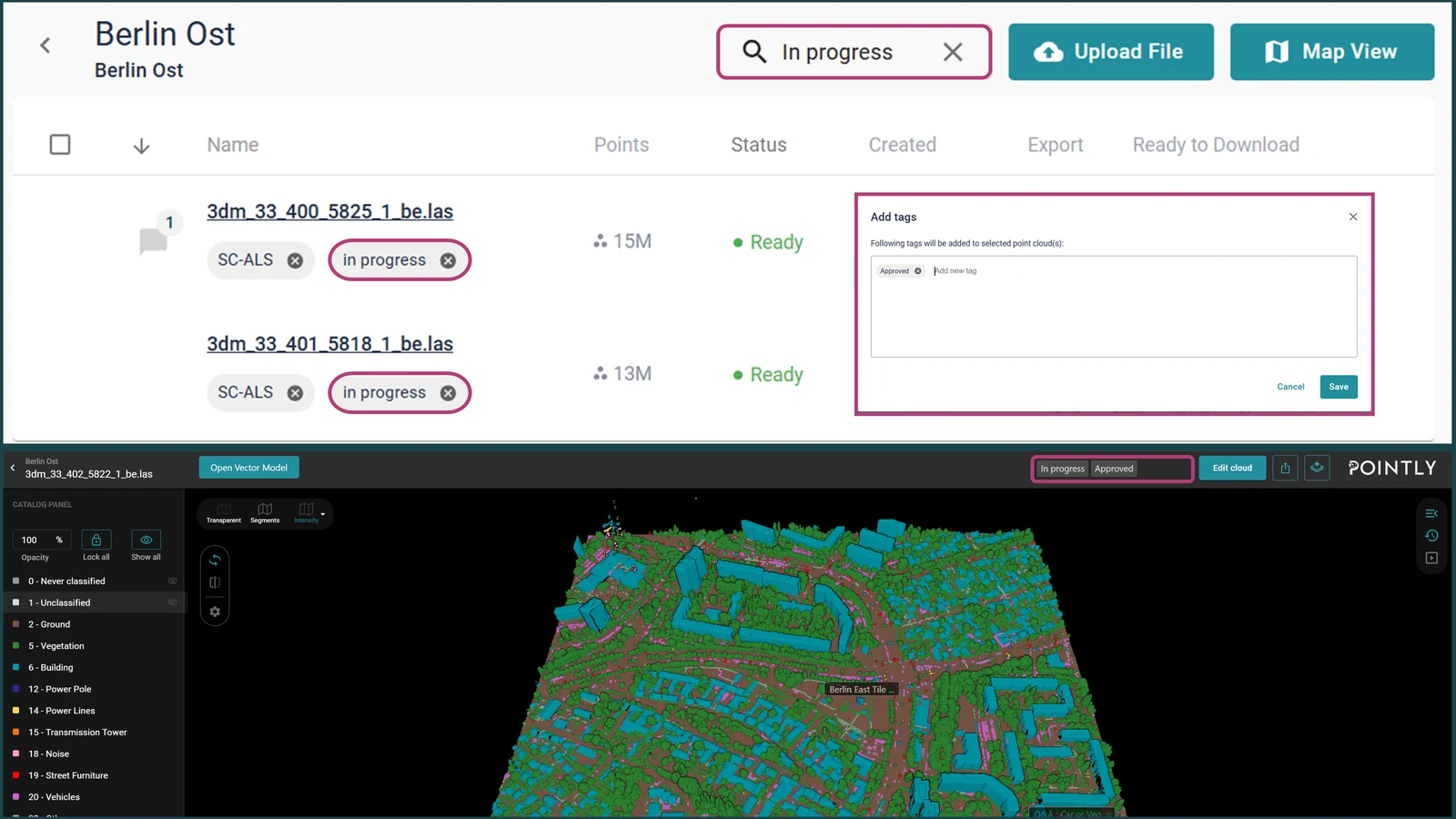
Tags are free, and they are how an estate of files gets a workflow. In progress, approved, delivered, whatever your process calls its steps. The list filters on them, so what is left to do is a search in the platform.
The organization behind it
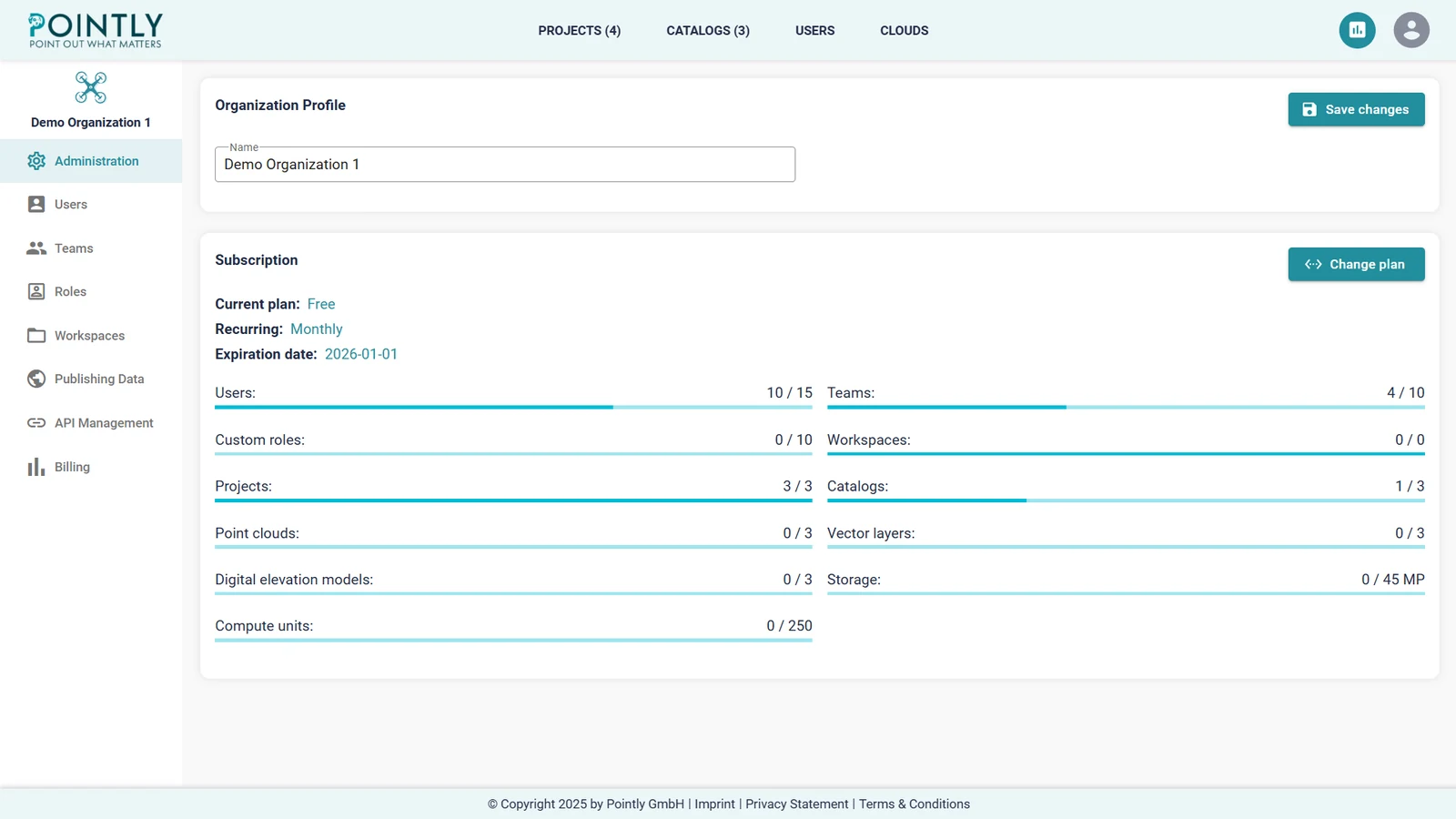
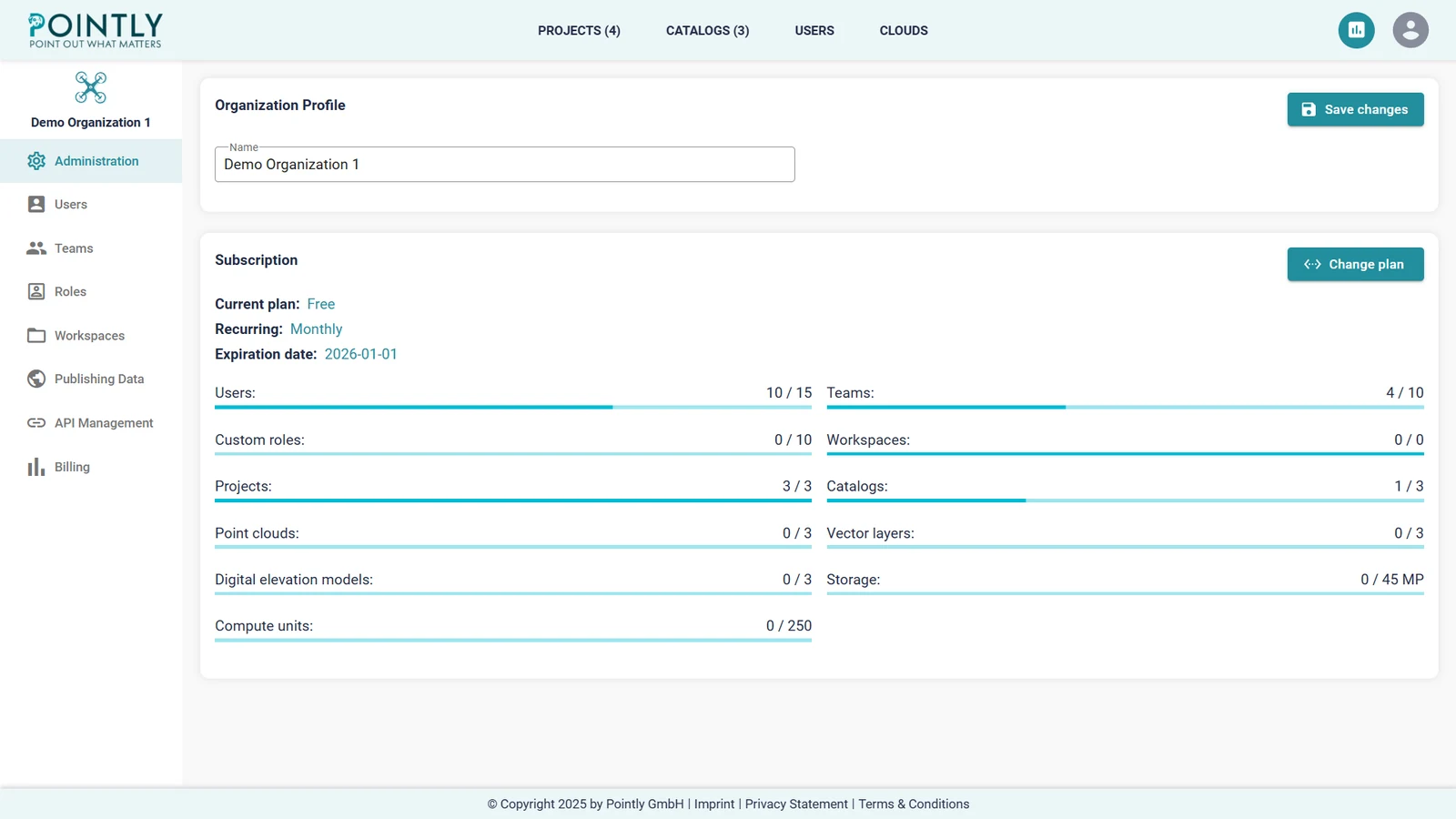
This is where the platform stops being a tool and starts being infrastructure: an organization, its users, its teams, and a role that says what each of them may do.
This layer is built, and it runs as a deployment of its own. It is not part of the standard platform, because the shape of it differs in every organization: which teams exist, what a guest is allowed to see, which roles your procurement writes down. We cut it to that, set it up for you, and it stays yours to administer afterwards. That is a conversation to have with us.
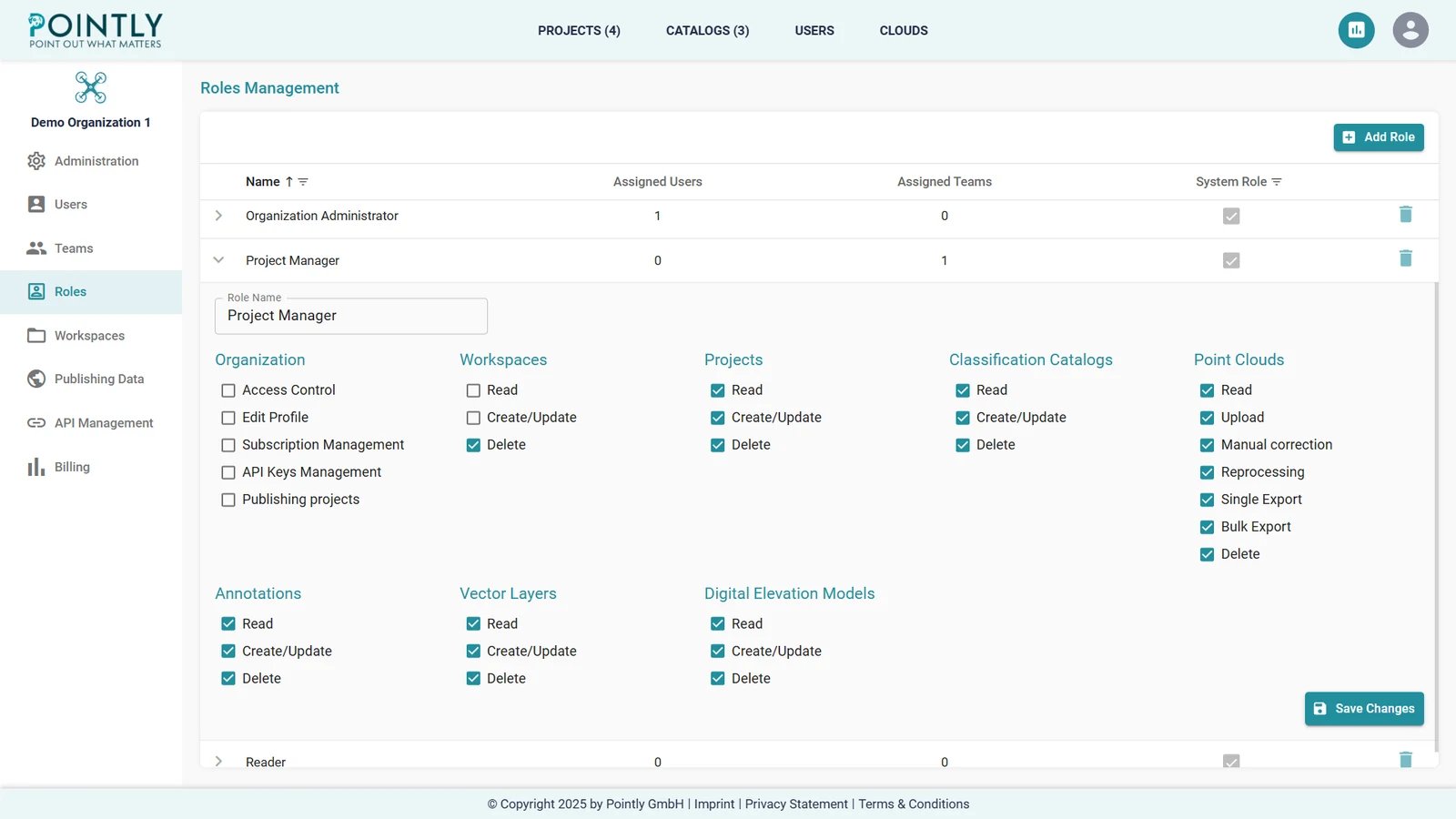
A role is a full matrix of permissions. Read, create, update and delete, set separately for the organization, the workspaces, the projects, the catalogs, the point clouds, the annotations, the vector layers and the elevation models. A project manager gets what a project manager needs and nothing else.
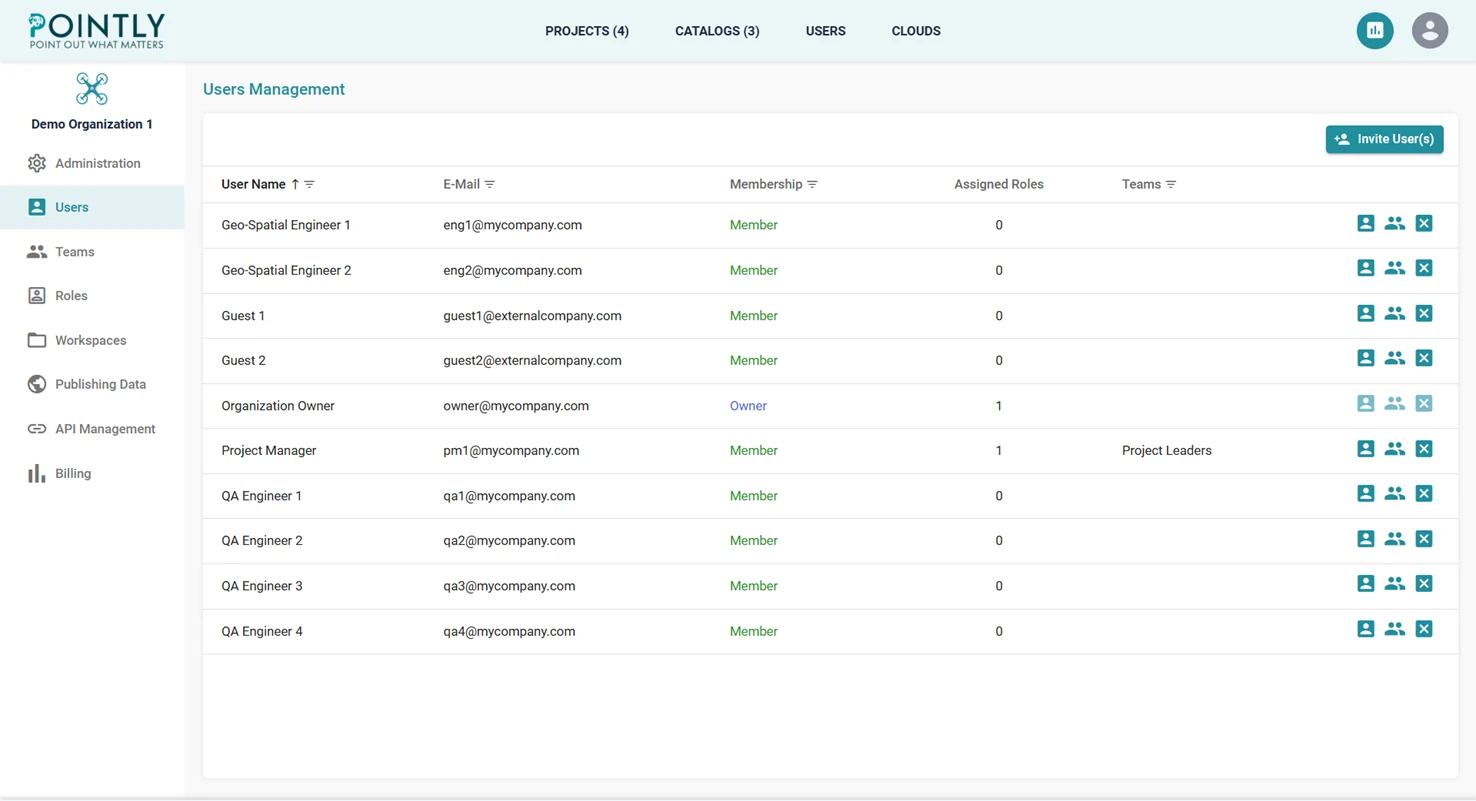
Users come in with an invitation, sit in one or more teams, and carry the roles that were assigned to them. External collaborators are ordinary members with a role that fits a guest.
Where to start
Some of this you can try today with a free account. The organization layer is the part that gets built for you, and what it should look like depends on how your teams are cut and what your procurement asks for.
That conversation is the point of this page. Tell us how your department works and we will tell you what a Pointly point cloud management platform would look like for it.
Read more about the four ways to run Pointly.
Read next